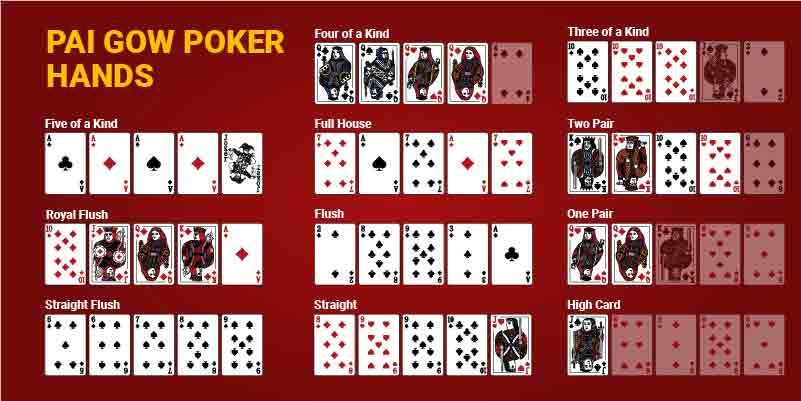

Pai Gow Poker combines ancient Chinese dominoes with modern American poker, creating a unique and strategic casino game. While luck plays a role, understanding how to set your two hands—a five-card “high” hand and a two-card “low” hand—is critical for long-term success. Mastering hand-setting strategy can significantly reduce the house edge and increase your chances of winning. This guide will walk you through the optimal strategies for setting your hands in various scenarios, helping you play like a pro.
The Basics of Hand Setting
The fundamental rule in Pai Gow Poker is that your five-card high hand must be of a higher poker rank than your two-card low hand. If you fail to set your hands this way, it’s a foul, and you automatically lose your bet. The goal is to win both hands against the dealer or, at worst, win one and push (tie) on the other. A push on both hands or winning one and losing one results in a push, where your bet is returned. You only lose if the dealer wins both hands.

Key Hand-Setting Principles:
- No Pair: When you have no pair, straight, or flush, place your highest card in the high hand and the next two highest cards in the low hand. This gives your low hand the best possible chance to win or push.
- One Pair: Always play the pair in your five-card high hand. Place your two highest-ranking single cards (kickers) in the two-card low hand. This maximizes the strength of your high hand while giving your low hand a solid foundation.
Advanced Strategy: Handling Multiple Pairs
Things get more interesting when you are dealt multiple pairs. How you split them is crucial and depends on the ranks of the pairs and your kickers.
Two Pair Strategy:
The decision to split two pairs is one of the most common and important in Pai Gow Poker. The general approach depends on the strength of the pairs:
- Low Pairs (2s-6s): Generally, you should split them unless you can place an Ace or King in your low hand. For example, with a pair of 5s, a pair of 4s, and an Ace, you should play the two pairs in the high hand and the Ace in the low hand.
- Medium Pairs (7s-10s): Split these pairs more often, playing the higher pair in the high hand and the lower pair in the low hand. This creates two reasonably strong hands.
- High Pairs (Jacks-Aces): Almost always split high pairs, unless you have an additional Ace to play in your low hand. For example, with two pairs, Aces and Kings, you should always split and play the pair of Aces in the high hand and the pair of Kings in the low hand. This creates a very strong low hand and a formidable high hand.

Three Pair Strategy:
When dealt three pairs, the rule is simple: play the highest pair in your two-card low hand. The remaining two (lower) pairs go into your five-card high hand, giving you a strong two-pair hand. This is almost always the optimal play.
Setting Straights and Flushes
When you have a straight, a flush, or both, you have a powerful hand, but you must decide whether to keep it together in the high hand or break it up to strengthen your low hand.
- With No Pair: Always play the straight or flush in your high hand, and put your two highest remaining cards in the low hand.
- With One Pair: You must decide whether the straight/flush or the pair is more valuable. Often, it is better to break up a straight or flush if it allows you to form a high-ranking low hand (like an Ace-King) while still leaving a pair in the high hand.
- With Two Pairs: If you have a straight or flush along with two pairs, you should generally play the two pairs according to the two-pair strategy rules. Often, this means splitting the pairs and forgoing the straight or flush to create two stronger, more balanced hands.

Special Hands: Three and Four of a Kind
These hands are strong, but require careful setting to maximize their potential.
Three of a Kind:
- Low Threes (2s-6s): Always keep the three of a kind together in the high hand.
- High Threes (7s-Kings): Keep them together unless you can play an Ace in your low hand.
- Three Aces: Always split. Play a pair of Aces in the high hand and an Ace-high in the low hand.
Four of a Kind:
How you play four of a kind depends on its rank:
- Low Ranks (2s-6s): Always keep them together in the high hand.
- Medium Ranks (7s-10s): Split them unless you have a pair of Kings or better to play in the low hand.
- High Ranks (Jacks-Aces): Always split them into two pairs unless you have another pair to play in the low hand. For example, with four Aces, you should split them into a pair of Aces for the low hand and a pair of Aces for the high hand.

By following these strategic guidelines, you can navigate the complexities of Pai Gow Poker and make optimal decisions when setting your hands. While the house way provides a baseline, using a refined strategy will give you the best possible odds against the dealer.



Editorial Review: This guide has been reviewed by the editorial team for clarity, practical value, mobile usability, payment safety, and safer decision-making.