poker strategy — poker strategy is at the centre of today’s discussion. The Best Poker Cards for your Poker Home Game The Best Poker Chips for your Poker Home Game The Best Poker Table for your Home Game Betting Structure, Blinds and Rules for Your Poker Home Game How to Shuffle and Deal The Best Poker Variants to Play at Your Poker Home Game How to Setup the Poker Table at Your Home Game The Best Food, Drinks and Snacks to Serve at your Poker Home Game Top 5 Best Poker Gadgets for Your Poker Home Game Strip Poker at Your Home Game Setting the Time and Date for your Poker Home Game Inviting People to your Poker Home Game Cash Game vs Tournament at your Poker Home Game Buyin and Chips Blinds and Structure Payouts and Winnings Gameplay Tournament vs Cash Game – Which is Better for a Poker Home Game? Poker Home Game Basics -Top 5 Things to Get Started 1. Learn the Rules of Texas Hold’em Poker 2. Learn the Poker Hand Rankings 3. Use the PokerNews Poker Odds Calculator 4. Choose your Poker Game Variant to Play 5. Download the Poker Cheat Sheet Top 5 Poker Home Game Strategies – Tips on How to Win Your Home Game How to Play Against Inexperienced Players How to Take Advantage of Weak-Tight Opponents How to Beat Calling Stations How to Beat Loose-Aggressive Players Protect Yourself Against Cheating Online Poker Home Games – How to Setup/Play your Poker Home Game Online How to set up PokerStars Home Games Online Download PokerStars Poker Etiquette – The Dos and Don’ts at your Poker Home Game Poker Home Games for Special Occasions Thanksgiving Poker Home Games Christmas Poker Home Games Birthday Poker Home Games New Year Poker Home Games Club PokerNews – Play the PokerNews Home Game Online Poker Home Games FAQs
Why poker strategy Matters in 2026
Hosting a poker home game can be fun, but it also involves a lot of planning and logistics if you want to do it right. There’s much to think about, from food and drink to the chips and the table.
We’ve created this comprehensive poker home game guide to help you set up an awesome poker home game. Trust us; we’ve covered absolutely everything you need to host a successful home game, so read on and get ready to play!
In a rush? Jump to one of the sections below or keep reading to discover everything you need for a fun night with your friends.
The Best Poker Cards for your Poker Home Game Best Poker Tables for your Home Game Betting Structure, Blinds and Rules for Your Poker Home Game The Best Poker Variants to Play at Poker Home Games How to Setup the Table for your Poker Home Game How to Shuffle and Deal in a Poker Home Game Best Poker Chips set for Home Games The Best Snacks, Foods and Drinks for your Poker Home Game Top 5 Best Poker Gadgets you NEED for you next Poker Home Game How to Play Strip Poker
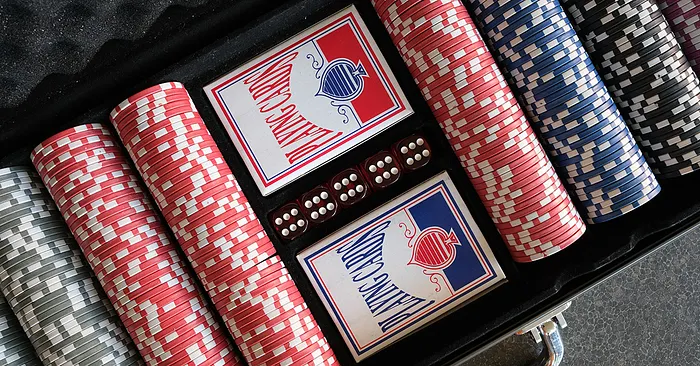
Preparation is key when it comes to running a successful home game. First on your list should be a proper, decent decks of cards of playing cards – ideally more than one.
It might sound simple, but there are a whole host of different cool decks to choose from. You have the classic playing card decks, the stylish metallic ones and also themed playing cards. While the gameplay of any home game is based on the poker, a nice deck of cards definitely adds to the game.
We’ve sorted through the hundreds of decks on offer to give you the very best playing cards. Visit our Best Poker Playing Cards page and choose your favourite.
Got your cards sorted? Next up is finding some quality poker chips to really get your home game started.
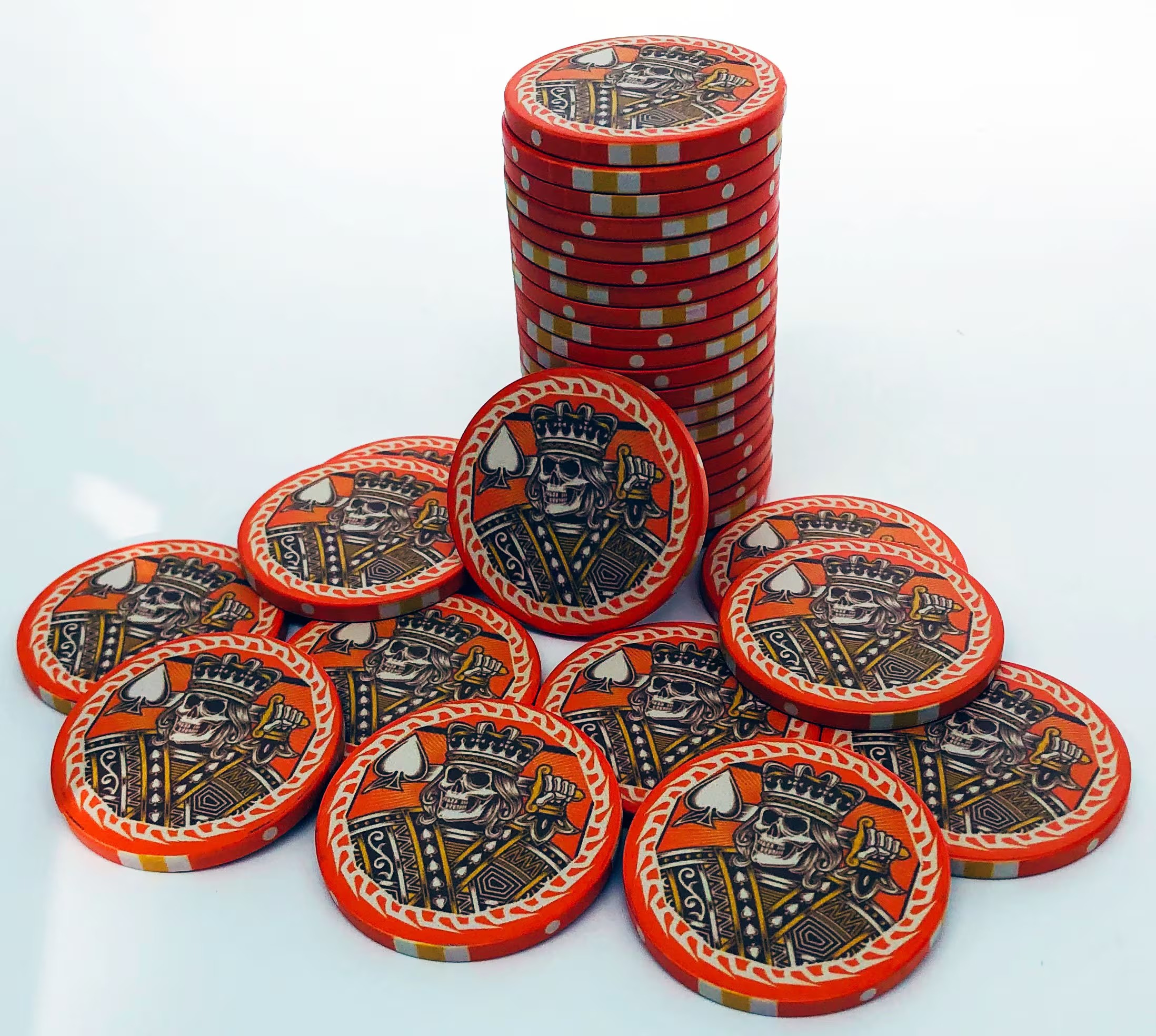
Like cards, there are several different options for you to choose from. Chips are important as it acts as the in-game currency and choosing a good set is key to adding that extra element of realism and quality to your game.
We’ve done all the hard work for you and come up with a complete list of all the Best Poker Chip Sets , including cheap options and the best chip cases. Check it out now and find the chip set for your home game.
A quality poker table is the most important element for your home game. You will want something that is easy to clean and durable. Additional options like cupholders, charging points and even LED lighting are available.
See our picks for the Best Poker Tables and find the ideal fit for your next poker home game.
How to run the game is an important element to any home game. Sure you could ‘wing it’ and decide when everyone turns up, but a well-run home game has rules and structure all determined beforehand so everyone knows exactly what their buyin gets them and what they’re getting in to.
We’ve come up with everything you need to know about the structure of your game , including the blinds, levels and format. Read it now and plan your home game to perfection.
Shuffling and dealing is perhaps one of the least eventful part of a home game, but it’s essential nonetheless. While most people can shuffle and deal in a basic way, we’ve got all the best tips on how to shuffle and deal at your poker home game.
No-limit Hold’em is your bread and butter when it comes to poker variants, but there is a whole other world out there to explore. Want a game with four hole cards? There is one. Want a game where you can see your opponents cards? There is one. Want a game that combines two different poker variants? There is one.
There are hundreds of different poker variants to play, but we’ve picked our favourites based on how well they work at home games. See our picks for the Best Poker Variants , where we’ve also added some of our favourite rule additions and twists to games that make your home game even more exciting.
Setting up the table is another aspect of a home game that can get overlooked. While it is fairly simple, there’s a bit more to it than dumping a load of chips on the table and putting your deck of cards at the front.
Here is exactly How to Setup your Poker Home Game in our comprehensive guide, so you can impress your guests with a proper setup.
Poker players like to eat and drink, and you will want to ensure they’re happy. A happy, well-fed group is more likely to turn into a regular game — and will likely be splashier with their chips too –.
If you want to step up your game and offer hot food, you have plenty of affordable choices that players will love. The first and most obvious choice is pizza. With just one phone call, you can feed as many people as you want for a reasonable amount of money. You may also consider catering from a local restaurant. A large pan of pasta, chicken, or beef can go a long way, and it’s easy to serve during a poker game.
You will want to know your group very well when it comes to choosing drinks. Are your friends beer people? Cocktail people? You will need non-alcoholic choices, too. It’s best to split the difference and offer enough variety so that everyone can find something they enjoy. You may want more quantity than quality unless you invite a particular group, so don’t worry about getting anything expensive.
The snack spread is important and you won’t want to skimp here. Offer nuts, pretzels, and at least two varieties of candy. You don’t have to go crazy, but players will appreciate a small snack between hands, especially if your game goes late into the night. Consider cleanliness when you make your choices. Think about what goes best with playing cards; avoid snacks that make hands messy.
Take your poker home game to the 21st century with some of the best gadgets around. From VR headsets to automatic card dealers, we’ve got everything you need to take your game to the next level with our Top 5 Poker Gadgets . What’s more, these gadgets aren’t going to set you back four figures. For less than a buyin to your home game, you can add some really cool additions to your game that will make your guests think twice about cancelling for a night in with a takeaway.
It may sound like something that belongs in a movie from the 1980s, but strip poker is still a pastime enjoyed by many worldwide. There is even a PokerNews Guide to Strip Poker with helpful tips for doing it yourself.
The general rules of poker are the same, but the twist in strip poker is that the losing hand (or hands) must remove an article of clothing. This ensures that people who are bad at poker end up naked.
Believe it or not, it’s perfectly legal for consenting adults.
Poker Tips Trends to Watch
Communicate with your group to determine the best time and date for your home game. You may be more likely to host a game on a weekend, but it would depend on the needs of your group.
You probably want to start in the early evening and allow space for players that arrive throughout the game. Prepare for the game to go all night until it breaks, or set a clear time limit.
Most games will start off with a group of close friends or colleagues. It’s wise to create a group text or other central means of communication. This will allow you to keep a tally of how many people will be showing up and easily update your guests.
Exercise caution with your guest list. Players should be someone you know or someone that a close friend knows. If your game starts to grow, be all the more careful about who you invite to your game. Allow your guests to invite friends but with the same amount of caution.
Have a straightforward method of communication for guests to ask questions or get updates. If they want to invite a guest, make sure you set expectations on how and when they should ask.
Home games are fun whatever rules, game or format you play, but there is a huge difference between a cash game and a tournament at your poker game. Both are the most common formats that are played in poker, but here is how to decide which one is the best for your game.
A cash game would entail all your players to buy in for a certain amount that will equate to an amount of chips they can play with. For instance, if players buy in for $100, they will get $100 dollars worth of chips to play with, split into the different denominations – an example of this is given in the table below. Then, whenever a player wins a hand, they will add the chips in the pot to their stack and their stack will equate to the exact value of the chips won.
Alternatively, a tournament will work a little differently. Players can buy in for the same amount, $100, but for this they will receive chips that do not directly equate to that $100. This is shown in the table below, where the total chip value of the stack is 10,000 – not $10,000.
The structure of the two formats will be different. In the tournament, the idea is to start off deep and raise the blinds in order to shorten stacks and ultimately force players out until there is one winner remaining. Using the chip stack above, if blinds start at 50/100 with 25 or 50 ante, then you begin the game with 100 big blinds. You can then decide on levels – a time period that a specific blind amount is in place. For instance, if you want to have a quicker game that doesn’t last for many, many hours, you might implement a five-minute blind level. (see table below). This means after an hour, the blinds will be at level 12 the starting stack of 10,000 will have just 5.55 big blinds.
If you wanted a slower game, you can implement slower blind levels. In tournaments, the longest are typically around 30-40 minutes but can be even longer. This means the game will be much slower, but allows for players to play deep and leaves it more down to skill to accumulate a big stack as there are fewer all-ins and more room to make plays without seriously depleting your chip stack.
It’s important to discuss and decide on blind levels before the game starts. If you choose them ‘on the fly,’ it might cause disagreements as the chip leader will be more inclined to raise blinds quicker or more frequently, while the short stack will be more reluctant to raise them. That being said, you can still adapt during the game (if, for instance, the game is going very slowly or someone cannot commit to a six or more hour game), but just bare in mind it should try to be fair for all players.
On the other hand, cash games won’t typically implement blind levels. Forcing players out and blinding them down until one player remains isn’t the aim of cash games. If rebuys are available, there isn’t too much need to implement blind levels. Blinds can be kept the same and it ensures all players stay deepstacked. That being said, you can always agree to up the blinds or even implement a straddle if you all agree.
Payouts and winnings are also different across cash games and tournaments. In tournaments, you should agree a payout structure before it begins based on the number of players. An example of this is show below, where we have a 10-player tournament with a $100 buyin (total prizepool = $1,000). In this case, the top three players will get paid based on the buyin from all the players. You can implement different rules as well to make it more interesting or keep all players engaged. For instance, you can add a bubble consolation where the player that busts directly one place before the bubble gets their buyin back. You could also add bounties, where a proportion of all players’ buyins go into the bounty pool and players get paid a predetermined amount for knocking out a player regardless of where they finish in the tournament.
In cash games, the fact that the chip stack directly equates to a dollar value (E.g. 1,000 chips = $1,000) makes the payout dynamic easy. Simply put, the amount of chips that a player has at the end of the game will directly correlate to the amount of money they win/are paid out. Because of that, it’s important in your cash poker home game to determine beforehand when the game will play till. If all players are happy to play until they agree to stop, that’s fine but it may create some problems further down the line. For instance, if a player is losing or has lost a lot, they might be more inclined to keep playing to try to win some chips back. Alternatively, a winning player who has a big chip stack might be happier to end the game and cash in his winnings. It’s just something worth considering beforehand.
The gameplay itself will be different as well between the two formats. In tournaments, the ICM factor can lead to players tightening up around the bubble. Added factors like bounties can have the opposite effect, where players are loser when a bounty is in play.
In cash games, assuming blind levels aren’t implemented, play will be consistent throughout the game. Players might be loose if rebuys are available and they’re deepstacked, but play shouldn’t vary too much unless a player is tightening up closer to the end of the game as they want to keep hold of their large stack – or a player with a short stack might loosen up if they know the game is ending to try to win back some chips.
Deciding which is better, a tournament or a cash game, for your poker home game is a difficult decision that is based on several factors.
The number of players, for instance, could be a significant factor in deciding which is best. If you have more than 10 players at your home game (and have the capacity for two tables), it’s definitely worth choosing a tournament format. Here, you can run two tables simultaneously and have decent payouts for those finishing in the top few places. Also, once you’re down to one table, you can open a cash game on the vacant table while the main tournament runs simultaneously. If you have just three or four players at your home game, as cash game might be a better way to go and there is less room for a deeper payout structure.
Speaking of payouts, they can be relevant when deciding which to go for. If you and your players want the chance to play for big money, a tournament is the way to go. A $100 buyin with 10 players can mean that the winner gets 5x or more their buyin. For a single-table tournament, this is a very decent return. What’s more, you can always implement a shallow payout structure where only 1st place gets paid. In this instance, winning the tournament will earn you 10x your buyin. On the other hand, unless you run like God you will be highly unlikely to win more than 5x your buyin in a cash game. This could go the other way, though. If your players are more adverse to risk, a cash game is definitely the way to go. In theory, all players could leave with the exact amount they buyin with. In reality, it’s still far more likely that the majority of players lose less than they would if it were a tournament.
In terms of fun and excitement, a tournament does have that but more so when it gets to its latter stages. A cash game, however, can be exciting from the start if specific rules and variants are added in.
Overall, either a tournament or a cash game will be great fun at your poker home game. Both include friends, poker and the chance to win some money, so either way you’ll have a good time. But based on some of the factors mentioned above, a tournament or cash game might be a better format to introduce than the other for your home game.
A well-run game will require a thorough knowledge of the rules, as disputes will arise in even the most friendly games. You probably don’t need to memorize the entire Poker Tournament Directors Association handbook, but you should have a grasp on the hand rankings and other common rules that come up in poker games.
The goal of a Texas hold’em game is to use your hole cards in combination with the community cards to make the best possible five-card poker hand.
In a game of Texas hold’em, each player is dealt two cards face down. Over several betting rounds, five more cards are (eventually) dealt face-up in the middle of the table. These face-up cards are called the ‘community cards.’ Each player can use the community cards combined with their hole cards to build a five-card poker hand.
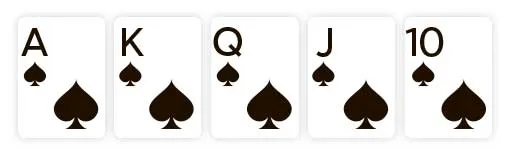
In a game of poker, the hand rankings work as follows: a pair beats a high card; a two pair beats one pair; a three-of-a-kind beats two pair; a straight beats a three-of-a-kind; a flush beats a straight; a full house beats a flush; a four-of-a-kind beats a full house; a straight flush beats a four-of-a-kind; a Royal Flush beats a straight flush.
Whether you are a beginner or an experienced veteran, a poker odds calculator can be a valuable tool for poker players. It can help you make more informed decisions during a hand by calculating the odds of various outcomes.
No-Limit hold’em is the most popular and well-known poker game, but that doesn’t mean you can’t mix it up at your home game. Try these poker variants if your group wants to go beyond the standard two-card game:
Omaha – Omaha plays just like hold’em, but players get four cards instead of two. The betting rounds are exactly the same, but the winner will be the player who can make the best hand using two of their hole cards and the community board. Omaha can be played with limits or as a pot-limit game, where players can bet the size of the pot at any time.
Expert Tips and Strategies
Stud games – Stud games are popular variants in which players are dealt cards face-up in addition to their hole cards. They’re played with betting limits and are popular as a casual game that new players can pick up on fast.
Draw games – Draw games give players five hole cards and a number of draws to make the best hand. Popular variants include five-card draw and 2-7 lowball . In lowball, players are trying to make the worst hand possible.
Consider having a dealer’s choice night where players can rotate their choice of games. It’s a great way to introduce players to new variants and keep your home game fresh.
Download the PokerNews Poker Cheat Sheet for a handy PDF guide to hand rankings.
Several strategies can be employed to win consistently at home games. Players can be less experienced and more interested in having fun than turning a profit, so there are many opportunities for a sharp, experienced player.
Regardless of the strategy, it’s important to remember that home games should be fun. You don’t necessarily want to clean out your friends every single week. They will likely stop coming back.
There are a few important things to remember when playing against novice players. In the end, they will be easier to beat, but they are also unpredictable. Check out five considerations for playing against novice players in your home game .
Weak-tight opponents are a common site at a home game. They are less experienced and very protective of their chip stack. But that doesn’t mean you can’t take their money. Check out a few tips for taking advantage of weak-tight opponents in home games .
The bizarre cousin of the weak-tight home game player is the calling station. They live to pay off your flush, so stay patient and be ready to get value when the opportunity presents itself. Check out five ways to beat calling stations in your home game .
The loose-aggressive player is going to throw around a lot of chips and that will be key to turning a profit at your home game. They are dangerous, unpredictable players, but they can be beaten. Check out a few tips for beating the loose-aggressive player at your home game .
Protect yourself from cheating at all times by remaining vigilant and staying informed of the telltale tale signs. Forms of cheating include chip snatching, card peeking, rigged shuffling, and collusion. Check out this guide to preventing collusion at your home game .
PokerStars Home Games allow you to set up a private members club where you can play cash games and tournaments. All games can be for play money and real money, so you don’t need to spend anything if you don’t want to.
You can invite whoever you want and even keep track of tournament leaderboard standings.
Here is our quick and easy five-step guide to setting up a PokerStars Home Game of your own.
If you haven’t got a PokerStars account already, you need one, so download the software now and set up a new account.
When you are slow rolling, angle shooting, tanking, of poor hygiene, berating, or being a bad tipper, you are displaying poor poker etiquette. There is a wide range of things to keep in mind when developing good social skills around the poker table, so even though poker home games often have a more relaxed and friendly atmosphere compared to professional settings, maintaining good etiquette is still important for ensuring everyone has an enjoyable experience.
One of the best times to have a poker game is around the holidays when friends and family are in town. The social atmosphere of a poker table is a great way to catch up, and there’s the added benefit of winning money.
Everyone returns home for the Thanksgiving holiday, and what better way to catch up than a cash game. Consider doing it on Wednesday, when everyone is in town and looking for something to do before the big day.
You can also have a game after the holiday and enjoy all of the leftovers. It’s a great way to avoid Black Friday shopping.
Invite your cousins and those old friends that you played with during the Moneymaker boom. The nostalgia will be too much to pass up.
It can be challenging to organize a game in the weeks before the Christmas holiday because everyone is budgeting for gifts and behaving responsibly. After the holiday, however, is one of the best times of the year to host a game. Work schedules are light, and the burden of gift-giving is behind everyone, so everyone is ready to open up the poker budget again.
Consider an evening of dealer’s choice in the days after Christmas. The holiday spirit will add to the fun.
If you are a poker fan, you may want to host a cash game or a tournament for your birthday. It can be a much better alternative to an expensive dinner or a night out on the town, and much like the other holidays, you have the added benefit of winning money.
It can be your birthday or someone else’s, but it’s a great way to get a group together and celebrate another milestone.
The new year is generally considered a party holiday, but once you grow to a certain age, you and your friends will likely prefer to stay in. Hosting a game on New Year’s is a great way to countdown to midnight with your friends.
New Year’s Day is another excellent option. Make sure to have multiple TVs to show the football games. Consider other variants and side pots for high hands to mix it up before midnight.
Club PokerNews is the one-stop hub where you can access an array of added value from many of our partners. From exclusive poker freeroll passwords and special poker offers to private PokerNews events, take advantage of all the benefits at Club PokerNews .
Check out the PokerNews Home Games group on the PokerStars Home Games platform, and keep an eye out for PokerNews tournaments and cash games throughout the year.
Key Takeaways
- poker strategy remains a defining force across poker & card game reviews & strategy 2026.
- Keep an eye on poker tips, online poker, poker reviews to stay ahead of the curve.
- Combine up-to-date news with solid fundamentals for the best long-term results.
Related reads on w3karigor.com
- Betting Strategies: Pro Virtual Sports Guide for MY 2026
- Poker Strategy: The Pro’s Guide for Malaysian Players 2026
- Card Game Reviews: Malaysia’s Ultimate Guide for 2026
Frequently Asked Questions
What is the most important thing to know about poker strategy?
The fundamentals of poker strategy revolve around staying informed, understanding the core mechanics of poker & card game reviews & strategy 2026, and adapting quickly when trends shift in 2026.
How can beginners get started with poker strategy?
Start by reading trusted guides, following official announcements, and practising with low-stakes scenarios before taking on bigger challenges in poker & card game reviews & strategy 2026.
Where can I find reliable updates about poker strategy?
Bookmark authoritative industry outlets and official websites. Our w3karigor.com feed is also updated regularly with curated news and analysis covering poker strategy, poker tips, online poker.
Source reference: original article.

Editorial Review: This guide has been reviewed by the editorial team for clarity, practical value, mobile usability, payment safety, and safer decision-making.